

Pet insurance • Practical decisions

Build dental coverage you can keep

Track the option you bought, its care requirements and the dental benefit remaining before the next bill.

Veterinarian examining a dog with its owner beside the table
✓ Policy-first ✓ Independent ✓ Useful checks
Direct answer
Pet insurance can help with dental care, but first identify whether the bill is for an accidental injury, dental disease or routine cleaning. Those can follow different policy provisions. A dental benefit’s name, pre-existing-condition rules, care requirements and cap matter more than a general statement that the plan “covers teeth.”
Coverage

Start a dental-benefit record

The useful output of shopping for dental insurance is a record you can use later. Save the exact dental provision or endorsement with the main policy. Record which events it addresses: accidental injury, disease, routine cleaning, or a defined combination. Do not let a broad “dental” label replace that list.

Record field What to copy from the offered terms
Benefit identity Exact option name, state form and services addressed
Enrollment and timing Whether the pet can add it now; effective date and any waiting rules
Required care Examinations, cleanings or other veterinarian recommendations the contract requires you to follow
Payment account Dental limit, deductible, reimbursement percentage and whether routine care shares the same allowance
Continuation Renewal rules and whether removing the option affects the ability to add it again

Mark an answer unknown if it appears only in a sales summary. The policy can distinguish eligibility to enroll from eligibility for a particular dental condition. Request clarification before making the premium commitment, especially when your pet already has a documented oral problem.
What to know

Why the exact option name belongs in that record

Dental Care is limited to select states; its guide specifies initial addition at ages 0–3 and keeping the benefit continuously in place. New-policy waits and preventive-care requirements remain relevant.

Its add-on overview describes a $1,000 annual Dental Care limit with no deductible. That does not mean the owner pays nothing: co-insurance, exclusions and the remaining allowance still need checking. A legacy Preventative+ cleaning allowance is a separate arrangement. A state-specific Dental Care endorsement was not obtained for this guide; request the actual offered terms rather than treating this summary as approval of your pet or a procedure.

Claims

Keep the care record current between claims

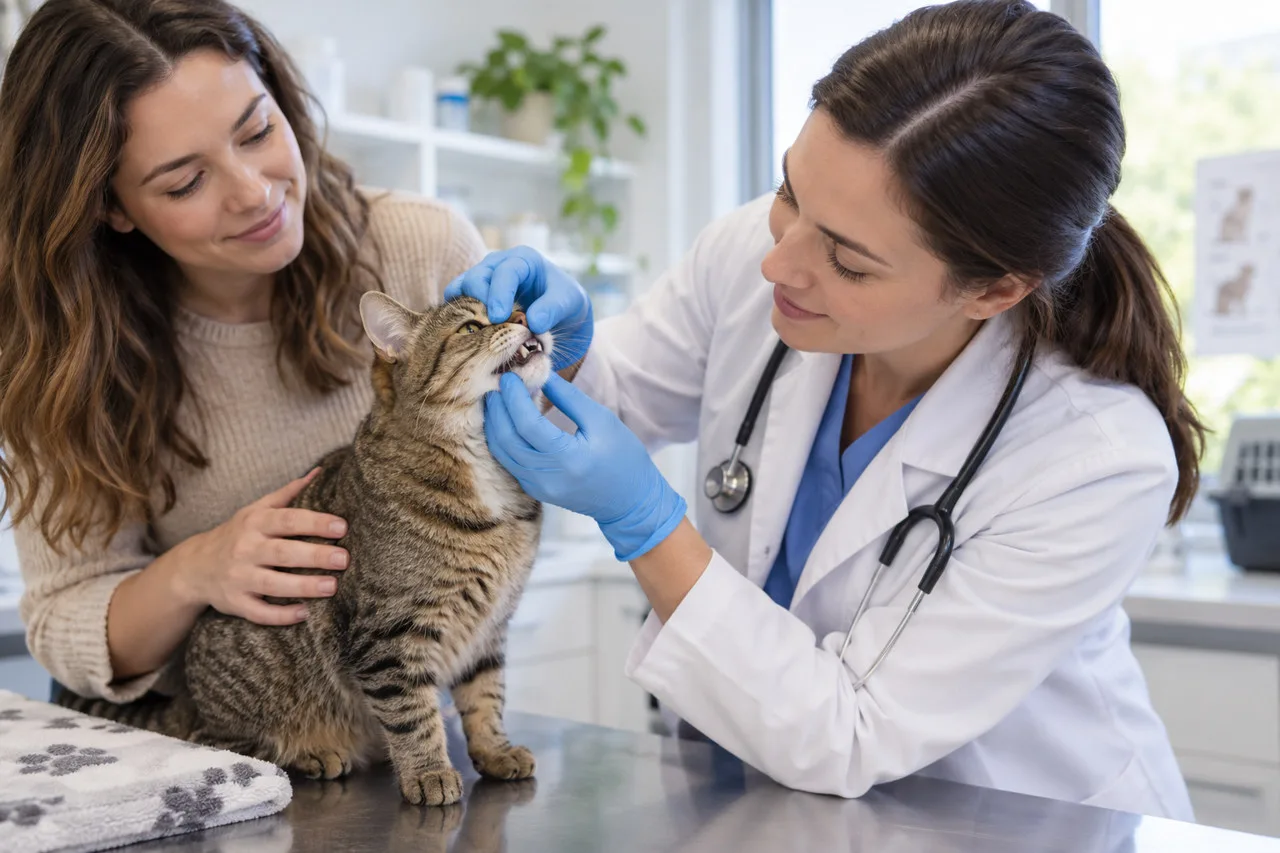
Veterinarian examining a tabby cat’s mouth while its owner supports it
A dental record distinguishes suspected findings, diagnosis and treatment.

Ask your veterinarian what dental follow-up is appropriate for the individual animal, and keep the recommendations and completion records. Then ask the insurer which of those records its dental provision requires. An insurance requirement and a clinical recommendation serve different purposes; neither should be guessed from an online checklist.

Cornell’s dentistry service explains that animals may conceal discomfort and that a definitive dental assessment may require anesthesia, probing, charting and radiographs. A normal-looking mouth or continued eating does not settle when disease began. Record findings accurately, and seek veterinary advice about concerning symptoms rather than waiting for a benefit to become available.

Quotes

Track the dental ceiling separately

A hypothetical dental benefit allows $1,000 in insurer payments per policy year, and $650 has already been paid. It has $350 left. Suppose a later $900 treatment is fully eligible, has no deductible and reimburses 80% before the cap. The percentage calculation is $720, but the remaining limit reduces the illustrated payment to $350. The owner keeps $550 of that bill.

They show why a large main medical limit does not substitute for a smaller dental allowance. Check whether the real contract measures the dental limit by insurer payments, eligible expenses or another basis, and whether different dental services share it.

Keep routine and medical balances separate unless the actual benefit combines them. Under a combined design, a cleaning might use part of the same allowance needed for later illness care. Under separate allowances, moving an expense from one column to another is not your choice; the service and contract determine its classification.

What to know

Review dental protection before removing it

At renewal, place the old dental-benefit record beside the new offer. Check the option name, cap, premium, care obligations and continuity wording. If you are considering removal to save money, ask whether the same option could be restored later and what age, medical-history or waiting rules would then apply. Do not assume an existing benefit can be paused and restarted unchanged.

  • If the option is retained, confirm how its allowance resets and how unfinished treatment is handled across renewal.
  • If the product or state form changes, ask which terms govern future dental care and save the written response.
  • If you switch insurers, have the new company explain its treatment of the oral history before canceling useful existing protection.
  • If coverage will not pay for necessary care, discuss the treatment estimate and payment arrangements with the veterinary practice rather than delaying assessment.
Evidence

Sources and policy context

These public references support the consumer or veterinary context. Named insurer details were checked in official product materials; the policy offered for your pet and state determines the actual terms.

Next step

Compare Current Pet Insurance Rates

Check current options for your pet and location, then compare the policy details, exclusions, costs, and eligibility before choosing.

Compare the policy before you choose Check the actual offer, exclusions and out-of-pocket terms.
See Rate Options